
Don't Sweat the Dust: A Homeowner's Guide to Protecting Your HVAC from Phoenix Haboobs
If you've lived in the Valley for any length of time, you know the sight: a towering wall of brown dust rolling across the horizon, turning a sunny afternoon into an eerie twilight. The monsoon season brings these dramatic dust storms, known as haboobs, which are as much a part of life here as the dry heat. While they make for incredible photos, they can be a nightmare for your home's air conditioning system. That fine dust gets into everything, and your HVAC unit is on the front lines. At Panda Air, we've seen firsthand how a single storm can strain even the most robust systems. This guide will walk you through practical steps to protect your AC, maintain your indoor air quality, and prevent costly repairs when the dust settles.
How Dust Storms Damage Your Air Conditioner
A haboob carries an immense amount of fine dust, sand, and debris. When your air conditioner is running, it's essentially a giant vacuum, pulling that dirty air into its components. This can lead to several problems that impact both your comfort and your wallet.
- Clogged Air Filters: Your system's first line of defense is the air filter. During a dust storm, it can become completely clogged in a matter of hours. A blocked filter severely restricts airflow, forcing your HVAC system to work much harder to cool your home. This strain can lead to overheating and premature failure of critical parts.
- Dirty Condenser Coils: The outdoor unit, or condenser, is responsible for releasing heat from your home. Its coils are covered in thin metal “fins” that can get caked with dust and debris. When these coils are dirty, the unit can't dissipate heat effectively. It runs longer and less efficiently, driving up your energy bills from SRP or APS and increasing wear and tear.
- Reduced Indoor Air Quality: If dust gets past the filter, it can settle in your ductwork. From there, it gets circulated throughout your home every time the system kicks on. This can aggravate allergies and respiratory issues, making your home less comfortable and healthy.
Ignoring the impact of dust can turn a simple cleaning task into a need for a significant HVAC repair.
What to Do Before, During, and After a Haboob
Being proactive is the key to minimizing dust-related HVAC issues. A few simple steps can make a huge difference.
Before and During the Storm
The best defense is a good offense. During monsoon season, pay attention to weather alerts. If a haboob is forecast, the most important thing you can do is turn off your HVAC system completely. While it might get a little warm for an hour or two, this prevents the unit from actively pulling in tons of dust. Make sure all windows and doors are securely closed to create a tight seal against the incoming storm.
After the Dust Settles
Once the storm has passed, it's time for a post-haboob check-up.
- Change Your Air Filter: This is non-negotiable. Even if the filter is relatively new, it's likely saturated with fine dust. A fresh, clean filter is the easiest and most effective way to restore airflow and protect your system.
- Inspect the Outdoor Unit: Visually check your condenser for any obvious debris like leaves or tumbleweeds that might have blown against it. Clear them away gently.
- Clean the Condenser Coils: You can gently rinse the outside of the condenser unit with a garden hose (never a pressure washer!). This will wash away the surface layer of dust. For a deeper, more thorough cleaning that gets between the delicate fins without causing damage, it's best to call a professional.
The Long-Term Solution: Maintenance and Professional Care
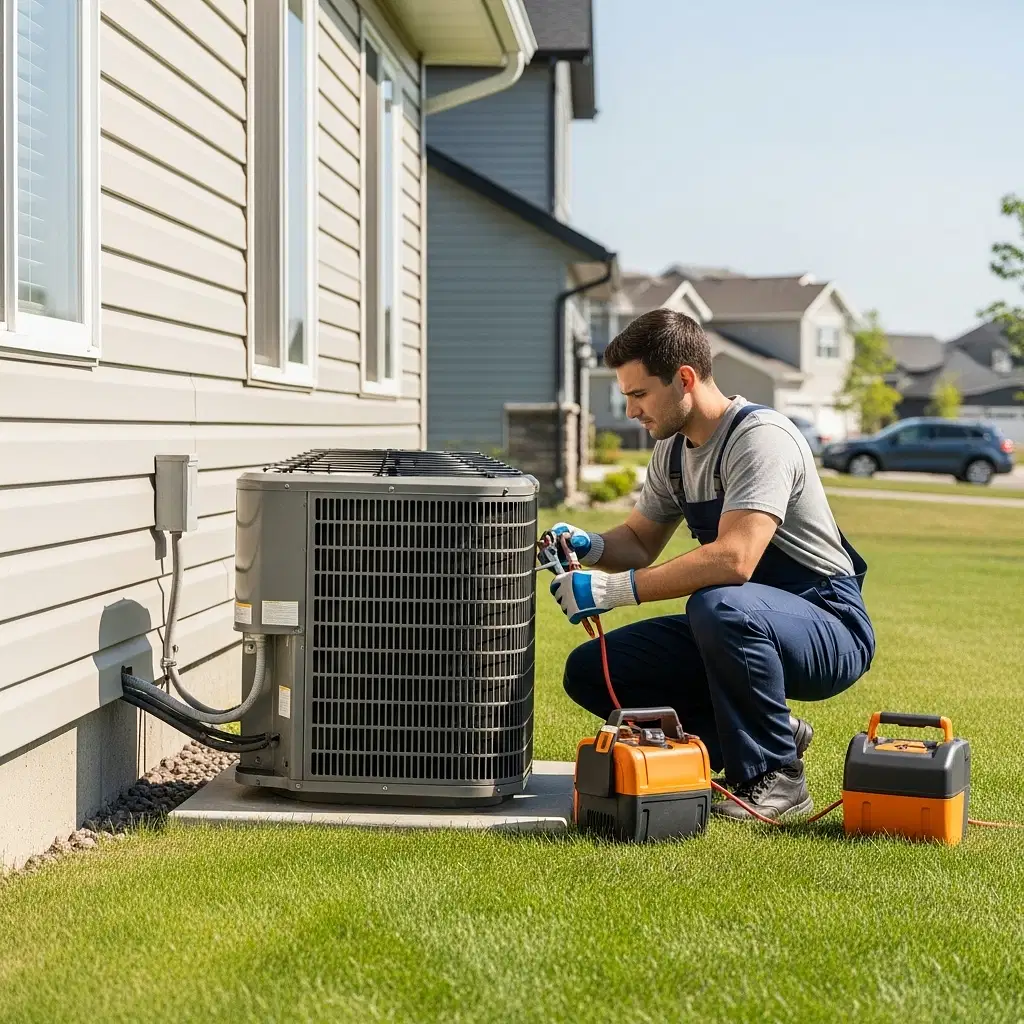
While responding to individual storms is important, the best way to ensure your HVAC system survives monsoon season year after year is through consistent, professional care. Regular HVAC maintenance is crucial in our desert climate. A tune-up prepares your system for the extreme stress of summer heat and dust storms. A technician will thoroughly clean components, check refrigerant levels, and identify any small issues before they escalate into system failures.
Furthermore, if you're concerned about the air you're breathing, especially after a few haboobs, it might be time to consider professional duct repair and cleaning. A professional service can remove the accumulated dust from your ductwork, ensuring the air circulating in your home is clean and healthy.
Think of it as an investment in your home's most important appliance. A well-maintained system is more energy-efficient, reliable, and has a longer lifespan, saving you from the stress and expense of an unexpected breakdown in the middle of a heatwave.
Stay Cool and Breathe Easy with Panda Air
The Sonoran Desert is our home, and we understand the unique challenges it poses to your comfort systems. From preparing for a haboob to cleaning up afterward, taking care of your HVAC is essential. By following these tips—turning your system off during a storm, changing your filter, and scheduling regular professional service—you can protect your investment and ensure your home remains a cool, comfortable sanctuary.
If a dust storm has left your system struggling or you want to get ahead of the next one, Panda Air is here to help. Contact us today to schedule a post-storm inspection, a thorough cleaning, or to learn more about our comprehensive HVAC maintenance plans for homeowners throughout the Phoenix area.