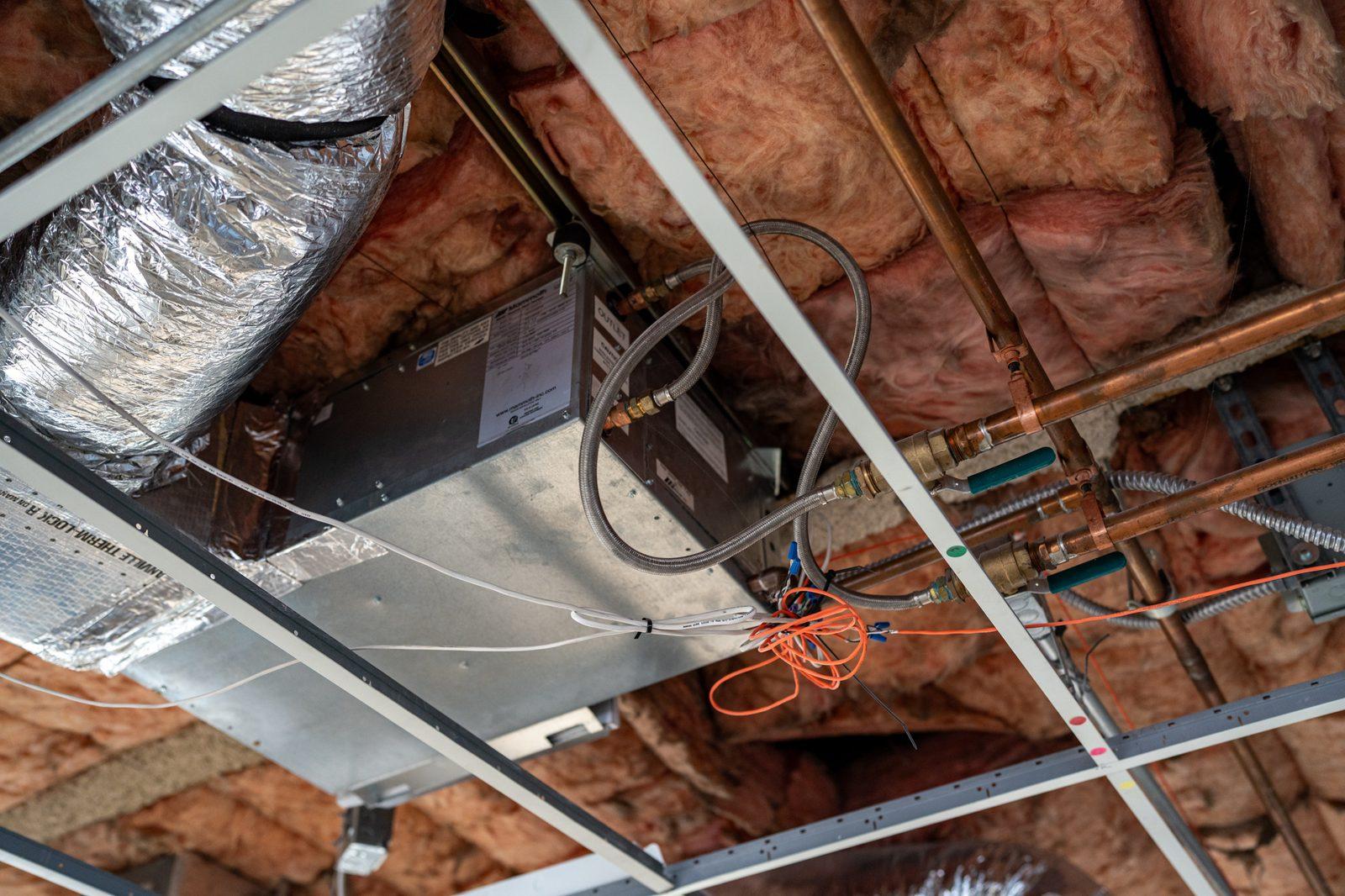
You find a puddle by the indoor unit, or a brown stain on the ceiling. It's often a drain problem, and it's worth catching early. Water that sits does more damage than the leak itself.
Here's where the water comes from, why it ends up inside, and what to do right now.
Why your AC makes water at all
Your AC cools by blowing warm air across a cold coil in the indoor unit. Moisture in the air turns to water on that coil, the same way a glass of ice water sweats on a hot day.
That water drips into a pan under the coil, then runs out through a drain line. The line is usually a small PVC pipe that ends outside near the foundation or ties into a drain in the house. In monsoon season the air holds more moisture, so the AC makes more water.
Water dripping from that pipe outside is normal. Water inside the house is not.
Many Valley homes have the indoor unit in the attic or a hall closet. So a leak can show up as a puddle on the closet floor, or as a stain on the ceiling below the attic.
Common causes of an AC leak
A clogged drain line
Dust, dirt and algae build up in the drain line until water can't get through. The water backs up into the pan and spills over the edge.
After a haboob, fine dust gets pulled into the system. Some of it lands on the wet coil and washes down into the drain.
A cracked or rusted drain pan
Older metal pans rust through, and plastic ones can crack. Then water drips straight out of the pan, even when the drain line is clear.
A full backup pan
Attic units often sit over a second, shallow pan as a backup. If you see water in it, the main drain has already backed up.
Many systems have a float switch that shuts the AC off when a pan fills. So if your AC quit and you find a full pan, the two are likely connected.
A frozen coil melting
Low airflow or low refrigerant can make the coil freeze. When the AC shuts off, the ice melts faster than the pan can drain, and the pan overflows. If the AC is also blowing warm air, our post on AC blowing warm air covers the other signs.
A dirty filter
A packed filter is a common reason a coil freezes. It's also the easiest fix on this list.
Stains on the ceiling
A stain or a sag below the attic unit means water has been getting past the pan for a while. Wet drywall and insulation can grow mold, and soaked drywall can sag and fall. Turn the AC off and call us before it spreads.
Oily fluid with a chemical smell
Water from the coil is plain water. An oily film on the lines or near the unit, or a chemical smell, may point to a refrigerant leak.
Don't touch it. Turn the system off, open a window or door to air the space out, and call us. Refrigerant work takes a certified tech.
What to do right now
- Turn the AC off at the thermostat. If water is near outlets or wiring, turn off the AC breaker too.
- Soak up the water and set out towels or a bucket. Move anything that water could ruin.
- Check the filter. If it's packed with dust, put in a new one.
- Check the pan under the indoor unit, if you can reach it safely. Look for standing water, rust or cracks, and soak up what's there.
- Look for ice on the coil or the copper lines. If you see any, leave the cooling off and set the fan to on so it melts.
- Find where the drain line ends outside. A wet/dry vac held over the end can often pull out a clog.
Wait until the pan is dry and any ice is gone before you turn the cooling back on. Then watch the drain line outside. Water dripping from it means the drain is working.
Call us if the leak comes back, you see a stain on the ceiling, the pan is cracked, the coil keeps freezing or the fluid looks oily. On the visit, we flush the drain line, check the pans and the float switch, and find out why the coil froze if it did.
You get the price before any work starts, and we test the whole system before we leave. Our AC repair page explains how we work, and most calls get a same-day visit with no emergency fee. A yearly tune-up includes a drain line flush, so a clog has less chance to build.
Common questions
Is it normal for my AC to drip water outside?
Yes. Water dripping from the drain line outside means the AC is getting rid of the moisture it pulls from your air. Water inside the house is the problem.
Can I keep running my AC if it's leaking?
Not if the water is getting inside. Turn it off, clean up the water and check the filter and the pan. Running it can soak your ceiling or floor.
How do I unclog my AC drain line?
A wet/dry vac held over the outside end of the line can often pull a clog out. If it doesn't clear, or the clog keeps coming back, call us and we'll flush it.
Why did my AC stop working when the pan filled up?
Many systems have a float switch that shuts the AC off when a pan fills. It keeps the water from spilling. Once the clog is cleared and the pan drains, the AC can run again.
Can a leaking AC cause mold?
Yes. Wet drywall, insulation and carpet can grow mold if they stay damp. Dry the area fast and get the leak fixed.