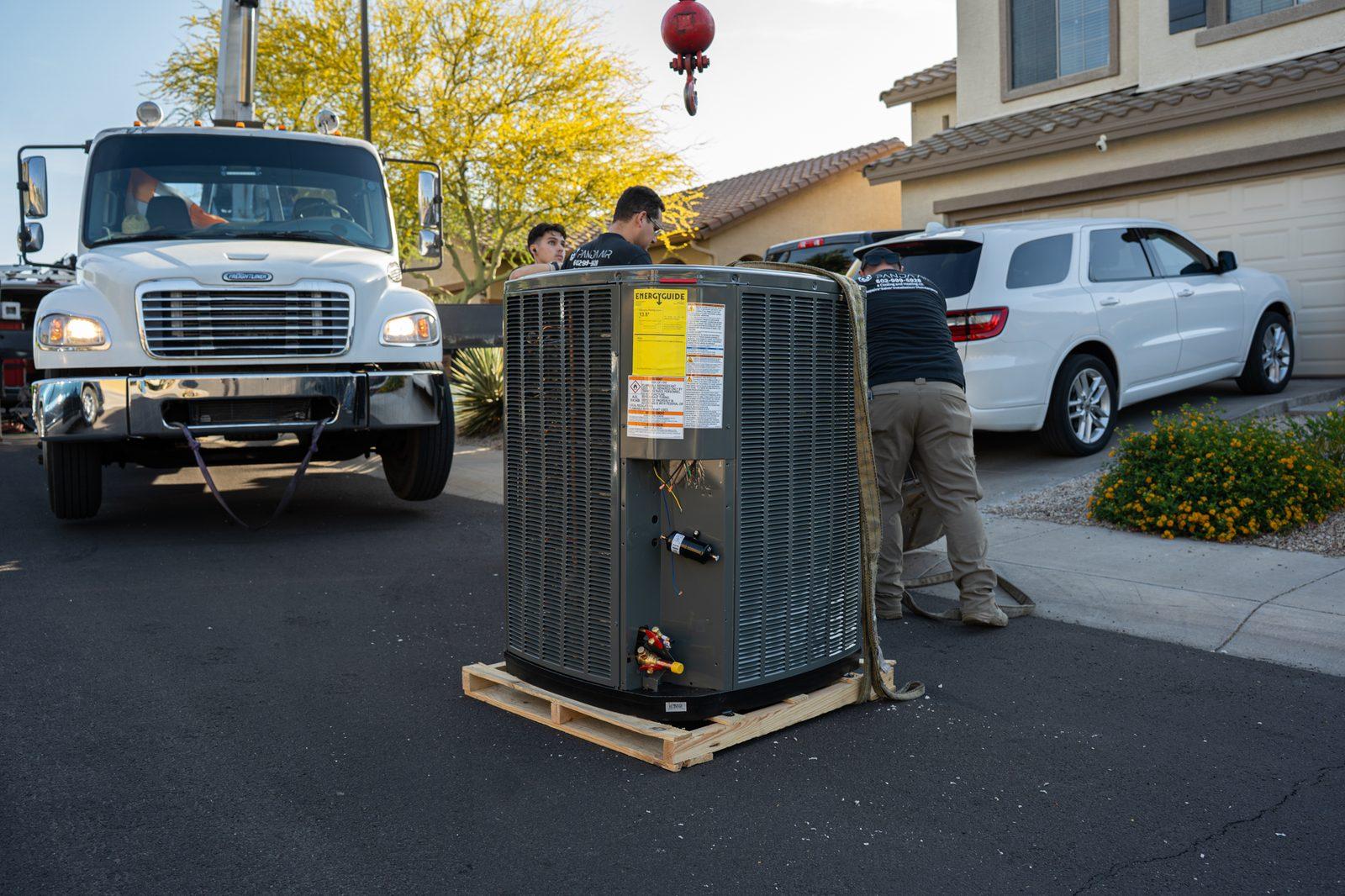
A Phoenix summer means months of triple-digit heat. An old AC running flat out through all of it can push your power bill way up.
Stuck between one more repair and a new system? The price tag isn't the whole story. SRP and APS, the two big power companies here, both pay rebates on new, efficient systems.
This guide covers why they pay, how to qualify, and how to keep the savings going once the new unit is in.
Why power companies pay you to upgrade
On a July afternoon, the whole Valley runs its AC at the same time and the demand for power spikes. Every home with an efficient system takes a little of that load off the grid.
Less load means fewer brownouts and less need to build new power plants. That's why SRP and APS will pay part of your upgrade.
What SEER2 means
SEER2 is the rating you'll see on every new system. It measures how much cooling you get for the power you use, tested in conditions closer to real life than the old SEER test.
In our heat, a higher SEER2 rating turns straight into a lower monthly bill and a cooler house.
How to qualify for a cooling rebate
It mostly comes down to two things: the right equipment and the right contractor. Most programs need the install done by a licensed, bonded and insured pro.
The equipment
We often recommend Trane inverter systems. They meet the latest SEER2 standards, and you can check on them and change settings from an app on your phone.
The contractor
A new AC is a big spend, so we start with a visit, not a sales pitch. We look at your setup and tell you straight whether a repair or a new system makes more sense.
If a new system is the right move, our HVAC installation team helps you pick one that qualifies for the rebates on offer. Feel free to get other quotes first, too.
A new system can also go in with 0% down and 36 months interest free, on approved credit.
Keep saving after the install
A rebate lowers the price once. How you run and care for the system decides what you pay every month after that.
Add a smart thermostat
A smart thermostat like a Nest or an ecobee learns your schedule, so you stop paying to cool an empty house. Some utility programs pay a small rebate for the thermostat on its own.
Stay ahead of the dust
Desert dust and monsoon storms clog filters fast, and a clogged filter makes the whole system work harder. Change yours every month in the peak of summer.
Then book HVAC maintenance at least once a year, best in spring before the heat. It keeps the system running at full efficiency and helps protect the maker's warranty.
Still comparing systems? Our cooling systems page covers heat pumps, central air and smart thermostats built for Valley summers.